
The sun & the lamp by ficino
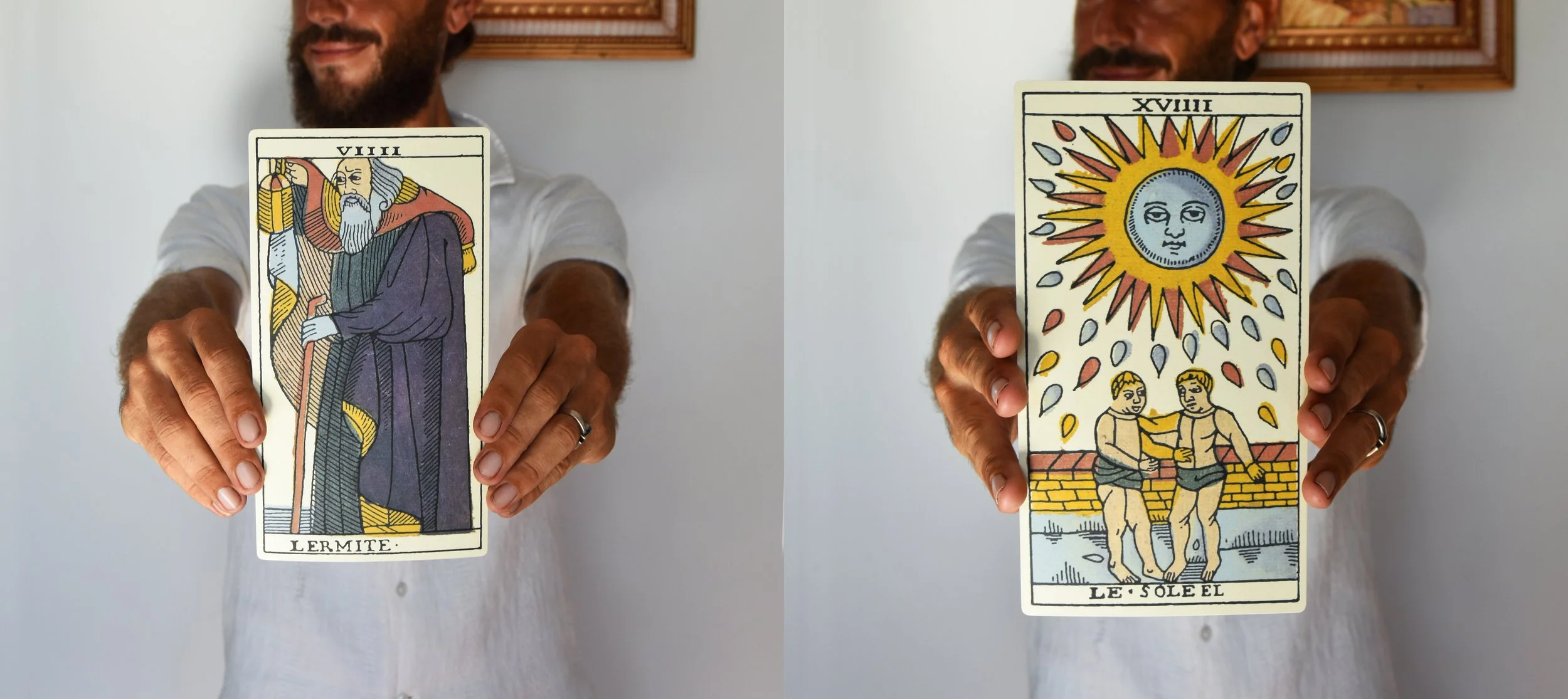
The Ermiter & the Sun from the Giant Nicolas Rolichon edition
Yesterday, I was reading one of Marsilio Ficino's letter to Niccolao degli Albizzi when suddenly something caught my attention :
Pythagore recommanda à ses disciples qu'ils s'observassent eux-même dans le miroir, non pas à la lumière d'une lampe, mais à la lumière du soleil "Ad lucernae lumen ne te speculo contempleris". Or qu'est ce que l'étincelle de la lampe, si ce n'est l'esprit encore insuffisament instruit ? Qu'est-ce que la lumière du soleil, si ce n'est l'intelligence le plus instruite ?
This could be translated in english as :
Pythagoras told his disciples that they should look at themselves in a mirror, not by the light of a lamp, but by the light of the sun "Ad lucernae lumen ne te speculo contempleris". What is the light of a lamp, if it is not a mind as yet too little instructed by knowledge? What the light of the sun, if not the mind totally under its instruction ?
Doesn’t that comparison between the lamp and the sun remind you of something?
Most of you will probably think of the Ermite’s lamp and the Sun card. The parallel becomes even more intriguing when we consider their numbering which are IX and XIX.
In tarot interpretation, it is commonly accepted that the Ermite and the Sun represent two sides of the same coin: one dark and the other radiant which closely matches the description found in the text.
When viewed through the lens of medieval astrology, the Ermite appears to draw from the iconography of Saturn, whose light was regarded as cold and dark which is an imperfect reflection of the Sun’s light. While the Sun card is clearly inspired by traditional astrological representations of the Sun.
That parallel between the light of the Sun and the light of the lamp is not new; it can already be found in Plato’s myth of the cave.
In medieval Christian iconography, the candle or the lamp often symbolizes human wisdom, understood as an imitation or reflection of divine wisdom, while the Sun represents Christ as the source of absolute divine wisdom.
In a letter from Marsilio Ficno to Michele Mercati of San Miniato written between 1470 and 1480, he provided us further information regarding his conception of the sun :
What then is the light of the sun ? It is the shadow of God. So what is God ? God is the sun of the sun; the light of the sun is God in the physical world, and God is the light of the sun above the intelligences of the angels. My shadow is such, O soul, that it is the most beautiful of all physical things. What do you suppose is the nature of my light? If this is the glory of my shadow, how much greater is the glory of my light: Do you love the light everywhere above all else? Indeed, do you love the light alone ? Love only me, O soul, alone the infinite light; love me, the light, boundlessly, I say; then you will shine and be infinitely delighted.